Foreign language communicative competence
 AnnaJune 14, 2026
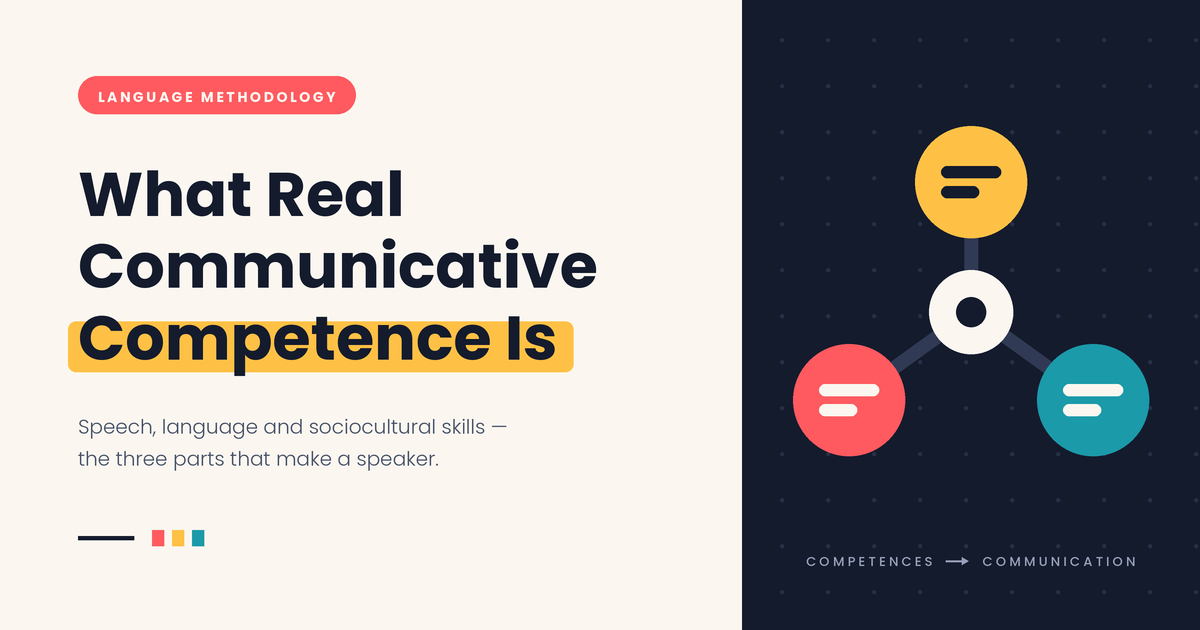
The primary goals and objectives of language learning are to develop students' foreign language communicative competence, which comprises speech, language, and sociocultural competences.
Speech competence involves the development of communicative skills in four main language activities: speaking, listening, reading, and writing.
Language competence refers to mastering new linguistic means—phonetic, orthographic, lexical, and grammatical—in accordance with the topics, spheres, and situations of communication. It also includes acquiring knowledge about the linguistic phenomena of the target language and the various ways of expressing thoughts in both the native and target languages.
Sociocultural competence entails introducing students to the culture, traditions, and realities of the country or countries of the target language within the framework of communication topics, spheres, and situations that align with the students' experience, interests, and psychological characteristics. It also involves forming the ability to represent one's own country and its culture in the context of foreign language intercultural communication.
The formation of the abovementioned competences is achieved through educational, communicative, and authentic tasks, as well as the simulation of problem-solving situations, namely:
· search-and-play tasks (aimed at developing keen observation, various types of thinking, creative imagination, etc.);
· communicative-search tasks (aimed at developing discursive skills, as well as the ability to select both the appropriate strategy and the optimal linguistic material in situations of direct and mediated communication);
· communicative-oriented tasks (aimed at fostering readiness to solve purely communicative, social, and search-and-information problems in conditions of competition and cooperation).
To accomplish all of the above, educational tasks are aimed at the formation, consolidation, and assessment of language skills (lexical, grammatical, and phonetic), as well as the skills underlying receptive and productive speech abilities.
During communicative tasks, a real exchange of information occurs between the participants of communication. Authentic tasks simulate real-life situations.
Keep reading
- SpeakingConfidence Strategy: How to Overcome the Language Barrier and Stop Fearing MistakesJune 17, 2026
- SpeakingI Understand Everything, But Keep Quiet: 5 Bold Steps to Finally Start Speaking EnglishJune 20, 2026
- VocabularyBeware of the Trap! How "False Friends" Prevent Us from Understanding EnglishJune 17, 2026